• What’s your view?
• What angle are you looking at it from?
• Work / Business
• Entertainment
• The latest trends
Advertising and the media
• Do you feel like you are lacking even though you had a great childhood and grew up surrounded by supportive people who were
in tune with your needs?
Why is that?
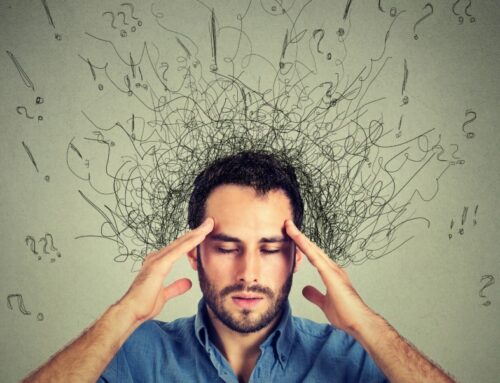
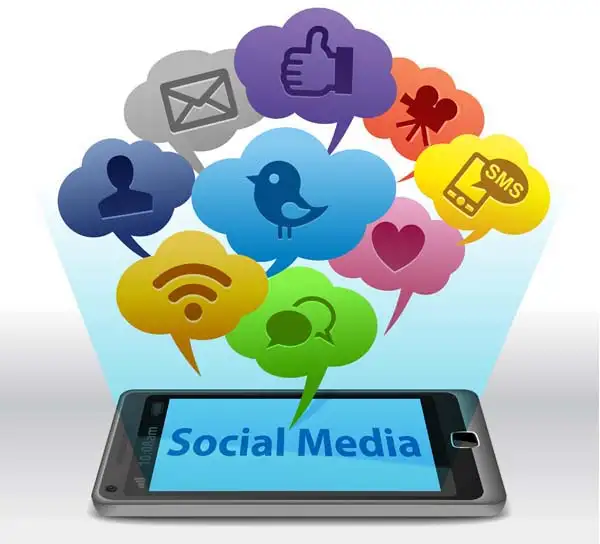
• Advertising, the media (films/tv/magazines) & social media eg Instagram – all these things can be inspiring however they can also leave us feeling rather inadequate, with low self-esteem and lead to anxiety, depression, restrictive eating and other forms of emotional distress.
Information & how we process it
Advertising, media & social media can have detrimental effects at any age. During our childhood and teenage years, we are most sensitive to the information given about who is worthy and lovable.
The magazines, adverts, movies, tv and social media we are exposed to growing up will have affected what we expect for ourselves, and these incredibly powerful media influences continue throughout our lives.
A Study
A study was done on a country that spent more money on advertising, as a consequence of this there was a subsequent dip in life satisfaction across the nation. It was predicted that if a country doubled its advertising spend, it could expect a 3% drop in life satisfaction across its population.
The relationship between advertising and life dissatisfaction
Due to this we are in a constant state of wanting more. A new phone, car or outfit, and you will feel good for a short while….then a
newer version comes out, you feel fine about how you look, then you open a magazine and scrutinize yourself & reach for the gym membership, clothes, diet, facial treatments…..because you don’t feel like youmatch up to the images you see. You feel too fat, too ugly, like a failure….it’s like because you feel like you haven’t acquired enough status that your life is not good enough and feelings of inadequacy can start.
Worthy with attractive!
Believing that if you could look like the people in the ads, refine myself in the gym, wear the right clothes, buy the perfume,
car, jewellery, etc I could have that life too. Advertising works!!
Reality
• What we fail to notice is that the models in the photos and the media etc don’t match up to the level of “perfection” portrayed, We fail to realise that they were photoshopped, adjusted with lightening and other technology.
Ads etc are specifically designed to sell and if they don’t look like that in real life, how could we!
Comparsion is the theft of joy!
Genders
Women are under significantly more pressure to conform to a thin body type, and subsequently report twice as much weight-based
discrimination as men. However male body issues are on the rise too, with research showing that increased exposure to images of
muscular male bodies directly links to decreased mood and higher levels of dissatisfaction.
Psychology of it – Social Comparison Theory
Leon Festinger, the father of Social comparison theory (1954), says comparison is one of the ways we learn about ourselves and make sense of where we are in the world. We look around, see what others are doing, then ask “how do I measure up?” If we feel we are doing better than others (this is called downward comparison), we will feel a boost and our self-esteem will go up. If we feel like we aren’t doing as well (upward comparison) but feel that with a little practice or effort we could achieve that level, we may feel inspired. If we see a large discrepancy, we may feel inadequate, defeated and lose motivation.
• From an evolutionary perspective, this will have helped our ancestors learn their place in their tribe, inspiring them to learn the skills needed to grow and be better at surviving in their environment, and may have helped them know when a fight wasn’t worth picking, as the opponent was bigger and clearly stronger.
• In the days before global media and the internet, we solely compared ourselves to our family, communities, colleagues or the joneses, nowadays its celebrities and influencers.
REMEMBER
• Advertising exploits the human drive to compare ourselves with others.
• It thrives by keeping us in a state of wanting more.
• If we felt we were ‘enough’, we’d buy much less.
• The next time you start to criticize yourself for your looks, or something you own that isn’t the newest model, take a moment…don’t
automatically reach for a new quick fix or the ’buy’ button. Ask yourself: ‘who’s profiting from my insecurities?’
Fight back
• When you notice negative social comparison arise at any time, know that it’s a normal human experience.
• Then reframe your thought – for example, if it occurs in relation to an ad, and you think, I’m ugly because I don’t look like that, remind yourself that people in advertising are nearly always filtered, photoshopped and edited. Remind yourself that no one’s worth is based on how they look, even though we’ve been told many times this is the case.
Mindset Switch
If it arises in relation to seeing someone attain a goal you have yet to achieve – they are incredible, I’m a failure – consider if there’s a way to see their achievement as something to aspire to, rather than as a sign of your failure. If self criticism is something that plagues you, try to manage this with eg mindfulness, notice and let go of upsetting thoughts, including comparison.
Use social comparison to your advantage
If you need motivation, look to people who are doing slightly better than you, who you feel you could aspire too. If you need a boost, look at people you feel are equal to you and are impressed by (it’s always easier to be proud of someone else’s success than our own), people who are behind you on your journey, perhaps a rung lower on your career ladder, so you can be reminded of how far you’ve come, or maybe compare yourself to yesterday’s self.
The Brain
Our brain uses short cuts to make sense of the world. One of these is social proof, the idea that if other people like something it must
be good, and if lots of people follow someone, they must be right. These short cuts can have us idolising people with huge followings,
taking their words and ideas as gospel, wanting to buy anything they are selling, whether what they are selling works for us or
not. They can stop us questioning what is right and true!
Challenge
Ok, I want you to spend the next 24 hours on the lookout for edited, airbrushed ads, and look for images on social media that might sneakily be selling you something.
What did you notice? Who is represented? What is them idea that your being sold?
What item(s) are they selling you? Are the people edited?
Then turn your attention towards yourself. Notice how you feel when you look at these ads. Scan your whole body. Is there any
part of you that have a sinking feeling?
Thanks
As always thank you for listening and allowing me to share my knowledge. Please note these are my own findings
through my own research…please make sure you also do your own research and I encourage you to be a critical thinker